
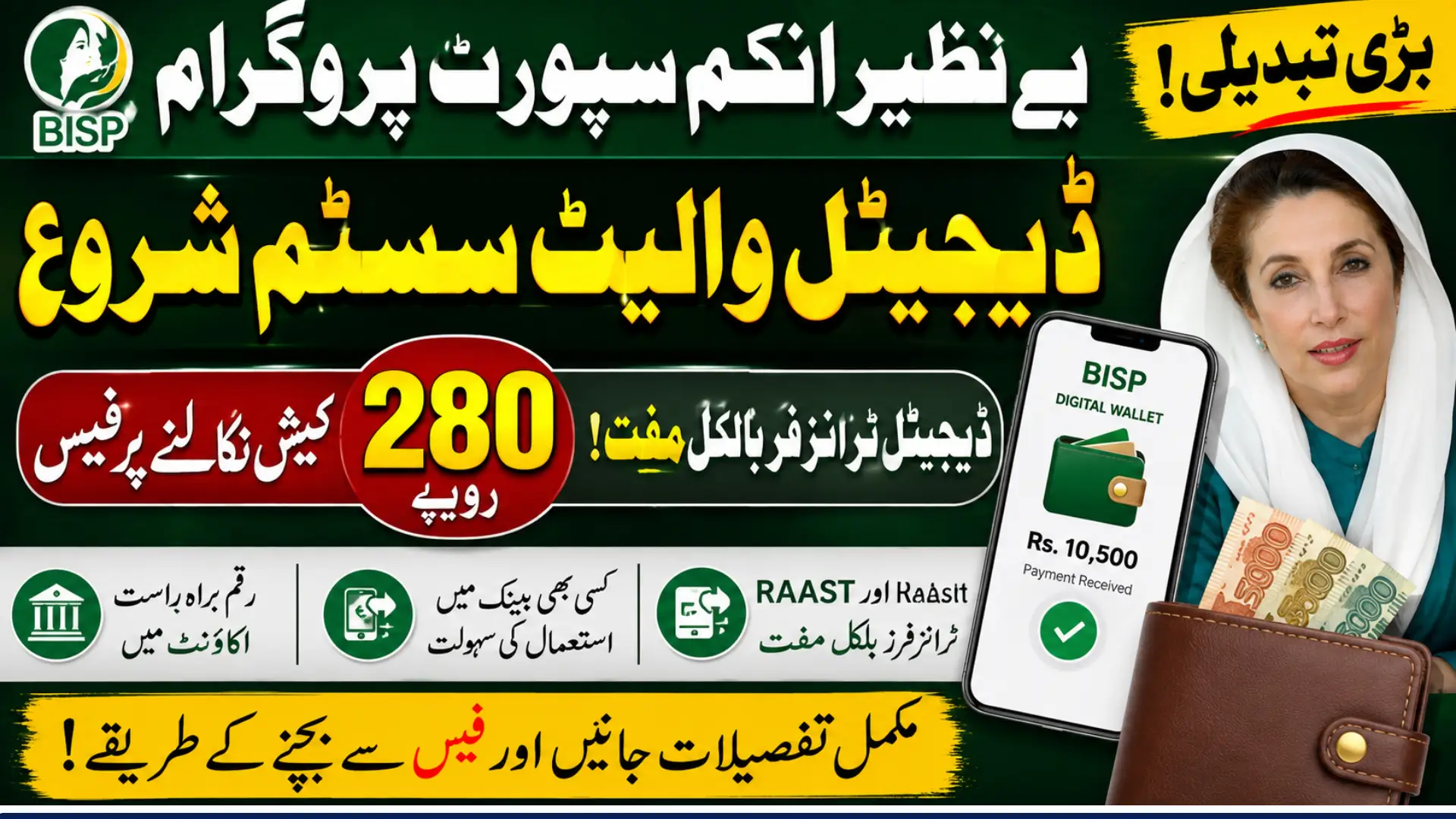
The Benazir Income Support Programme (BISP) is moving toward a fully digital payment system, bringing a major change for millions of beneficiaries across Pakistan. Under this new system, payments will be transferred through interoperable digital wallets, making transactions faster, more transparent, and easier to track.
However, one important update is that cash withdrawal from these digital wallets will carry a fixed fee of Rs. 280, while digital transfers will remain completely free. This guide explains everything you need to know in simple terms how the system works, what it means for you, and how to avoid unnecessary charges.
What Is the New BISP Digital Wallet System?
The new BISP system introduces digital wallets linked to beneficiaries’ accounts, allowing them to receive payments directly without relying on agents or physical cash centers. This system aims to reduce fraud, eliminate middlemen, and improve transparency in fund distribution.
You can also read: Apna Ghar Mehfooz Ghar Online Apply
With interoperability, beneficiaries can use their wallets across multiple banks, meaning they are not restricted to a single service provider. This makes accessing funds more flexible and convenient, especially in remote areas where banking options are limited.
Key Features of the Digital Wallet Initiative
This new system is designed to modernize how financial aid is delivered in Pakistan. It focuses on digital inclusion and ease of access for low-income families.
- Interoperable wallets usable across multiple banks
- Direct payment transfer into beneficiary accounts
- Reduced dependency on agents and campsites
- Improved transparency and tracking of funds
- Secure transactions through regulated banking systems
Overall, this initiative brings BISP closer to a fully digital financial ecosystem.
Cash Withdrawal Fee Explained (Rs. 280 Charges)
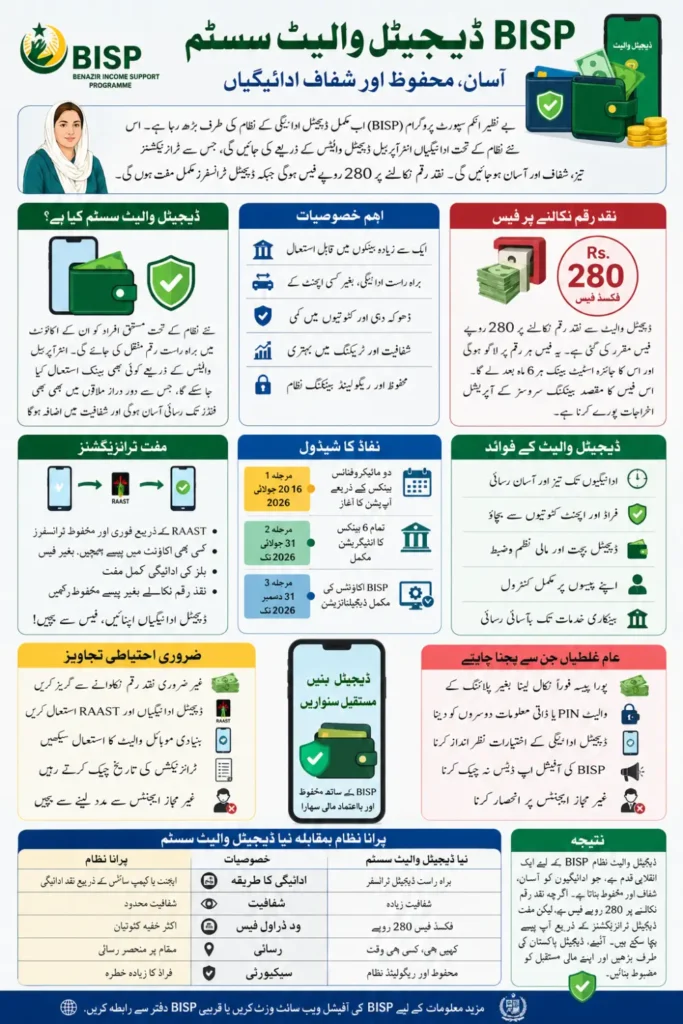
Under the new policy, beneficiaries will be charged a fixed Rs. 280 fee for withdrawing cash from their digital wallets. This fee applies regardless of the withdrawal amount and will be reviewed by the State Bank of Pakistan every six months.
The purpose of this fee is to cover operational costs of banking services. However, it has raised concerns because many low-income families rely heavily on cash withdrawals and may find repeated charges burdensome over time.
Free Transactions: RAAST and Online Transfers
While cash withdrawals are charged, digital transactions are being strongly encouraged by keeping them completely free of cost. This includes transfers through Pakistan’s instant payment system, RAAST.
- Send money to other accounts without charges
- Pay bills digitally at no cost
- Use RAAST for instant, secure transfers
- Avoid withdrawal fees by keeping money in digital form
This strategy aims to promote a cashless economy and reduce reliance on physical cash.
Implementation Timeline and Rollout Plan
The rollout of this system will happen in phases, ensuring smooth integration across banks and regions.
| Phase | Timeline | Details |
|---|---|---|
| Phase 1 | July 16 & July 20, 2026 | Two microfinance banks start operations |
| Phase 2 | By July 31, 2026 | All six banks complete integration |
| Phase 3 | By Dec 31, 2026 | Full digitalization of BISP accounts |
This phased approach ensures that technical issues are minimized and beneficiaries can adapt gradually.
You can also read: BISP Payment to Bank Account
Benefits of Digital Wallets for BISP Beneficiaries
The introduction of digital wallets offers several long-term advantages, especially in terms of convenience and security.
- Faster access to payments without long queues
- Reduced risk of fraud and deductions by agents
- Ability to save money digitally
- Greater control over funds and spending
- Access to formal banking services
These benefits can significantly improve financial inclusion for underserved communities.
Challenges and Concerns Raised by Authorities
Despite the benefits, the system also faces some serious concerns highlighted by policymakers. One major issue is low awareness among beneficiaries, especially in rural areas where digital literacy is limited.
Additionally, there are concerns about banks not properly fulfilling their responsibilities, such as providing adequate support and infrastructure. Authorities have instructed BISP to strengthen monitoring and ensure banks deliver proper services.
Important Tips to Avoid Extra Charges
To minimize costs and use the system effectively, beneficiaries should follow some practical strategies.
- Avoid frequent cash withdrawals to save Rs. 280 fee
- Use digital payments whenever possible
- Transfer money through RAAST instead of withdrawing
- Learn basic mobile wallet usage for daily transactions
- Keep track of transaction history to avoid confusion
By following these tips, users can make the most of the new system without losing money unnecessarily.
Old BISP Payment System vs New Digital Wallet System
| Feature | Old System | New Digital Wallet System |
|---|---|---|
| Payment Method | Cash via agents/camps | Direct digital transfer |
| Transparency | Limited | High |
| Withdrawal Fee | Often hidden deductions | Fixed Rs. 280 |
| Accessibility | Location-dependent | Available anywhere digitally |
| Security | Risk of fraud | Secure banking system |
The new system clearly offers more transparency and control, although the withdrawal fee is a new factor to consider.
Common Mistakes Beneficiaries Should Avoid
Many users may face problems if they are not careful while using the new system. Avoiding these common mistakes can save time and money.
- Withdrawing full amount immediately without planning
- Sharing wallet PIN or personal details with others
- Ignoring digital payment options
- Not checking official updates from BISP
- Relying on unauthorized agents for help
Staying informed and cautious will help beneficiaries use the system safely.
You can also read: CM Punjab Rehmat Card Registration Process


Conclusion
The introduction of digital wallets in BISP is a major step toward financial modernization in Pakistan. While the Rs. 280 withdrawal fee may feel like a burden initially, the system encourages users to shift toward free digital transactions, which can ultimately save money.
As awareness improves and infrastructure strengthens, this initiative has the potential to transform how financial aid is delivered. Beneficiaries who adapt early and learn digital tools will benefit the most from this transition.