
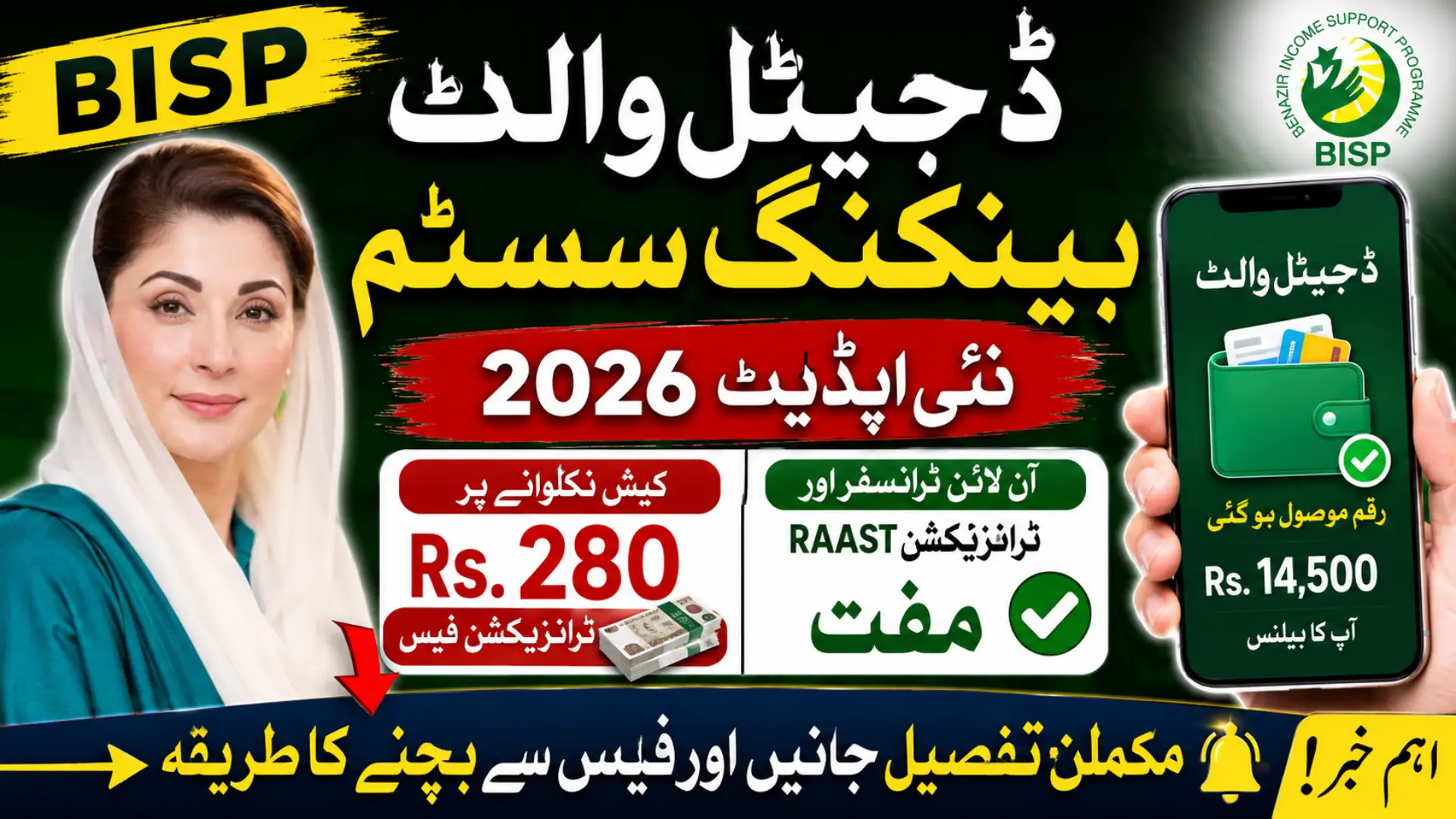
The Benazir Income Support Programme (BISP) is introducing a modern digital wallet banking system to make payments faster, safer, and more transparent for millions of beneficiaries across Pakistan. Instead of relying on a single payment partner, eligible families will soon be able to receive their financial assistance through multiple participating banks using digital wallets.
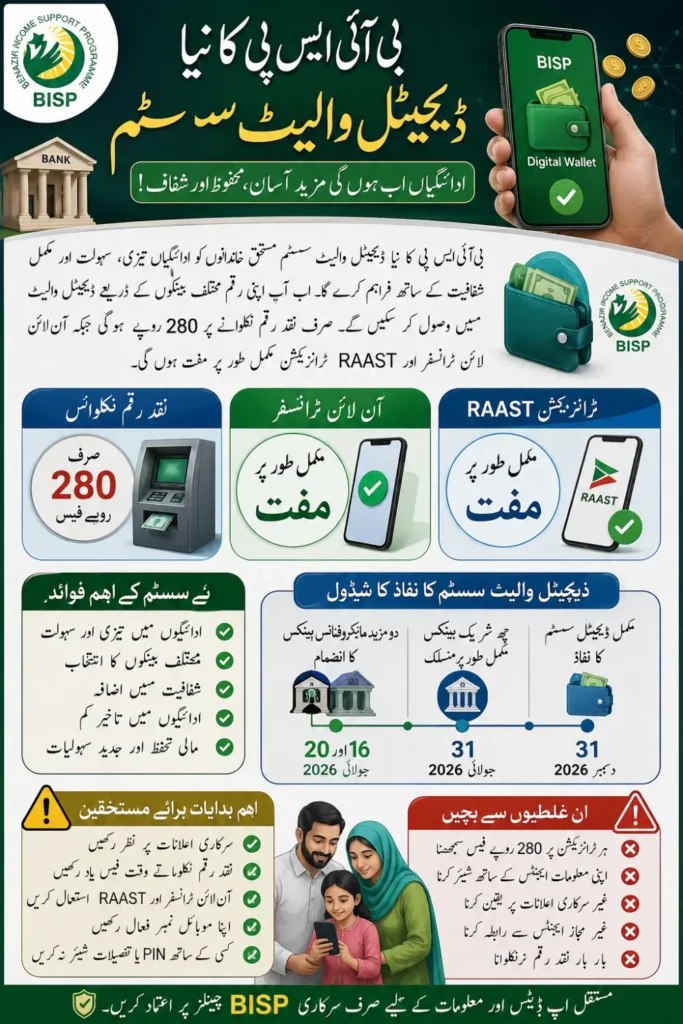
However, the latest update has also introduced an important change. Beneficiaries who withdraw cash from their digital wallet will have to pay a Rs. 280 transaction fee, while online transfers and RAAST payments will remain completely free. If you receive BISP payments, understanding how this new banking system works can help you avoid unnecessary deductions and make better use of your funds.
What is the New BISP Digital Wallet System?
The new BISP Digital Wallet System is part of the government’s plan to fully digitize social welfare payments by the end of 2026. Under this system, every eligible beneficiary will receive payments in a secure digital wallet linked to participating banks instead of depending on traditional payment centers.
You can also read: BISP Digital Wallets SBP: Check Digital Wallet Cash
The biggest advantage of this model is that beneficiaries will have greater flexibility. They will be able to access their money through multiple banking partners, reducing payment delays and improving transparency throughout the payment process.
BISP Digital Wallet Update 2026 at a Glance
| Details | Information |
|---|---|
| Programme | Benazir Income Support Programme (BISP) |
| New System | Digital Wallet Interoperability |
| Cash Withdrawal Fee | Rs. 280 Per Transaction |
| Online Transfers | Free |
| RAAST Transfers | Free |
| Participating Banks | Six Banks |
| Banking Integration Completion | 31 July 2026 |
| Full Digitalisation Target | 31 December 2026 |
Why Will Rs. 280 Be Deducted From BISP Payments?
During the National Assembly Standing Committee meeting, officials from the State Bank of Pakistan (SBP) confirmed that beneficiaries will pay Rs. 280 only when they withdraw cash from their digital wallet. The charge covers banking transaction costs under the new interoperable payment system.
It is important to understand that this is not a deduction from your BISP payment amount itself. Instead, it is a transaction fee applied when cash is withdrawn. The State Bank will also review and update these transaction charges every six months if required.
Which Transactions Are Free Under the New System?
Not every transaction will include a service charge. The government has confirmed that digital banking services will remain free to encourage beneficiaries to use electronic payments instead of cash.
The following services will continue without any fee:
- Online money transfers
- RAAST transactions
- Digital wallet fund transfers
- Electronic payment services supported by participating banks
Beneficiaries who avoid cash withdrawals can continue using these digital services without paying the Rs. 280 transaction fee.
How the New BISP Banking System Will Work
After the rollout is completed, eligible beneficiaries will receive their financial assistance directly into their digital wallets. Instead of visiting a specific payment center, they can access their funds through different partner banks participating in the interoperability system.
You can also read: Apna Ghar Mehfooz Ghar Program Online Registration
The new banking model is designed to improve convenience while reducing long queues, payment delays, and dependency on a single financial institution. It also allows better tracking of payments and strengthens transparency across the programme.
Digital Wallet Rollout Timeline
The implementation is taking place in phases so banks can complete technical integration before nationwide deployment.
| Phase | Expected Timeline |
|---|---|
| Two Additional Microfinance Banks Integration | 16 July & 20 July 2026 |
| Six Participating Banks Fully Connected | 31 July 2026 |
| Complete Digital Banking for Beneficiaries | 31 December 2026 |
Once the final phase is completed, every eligible BISP beneficiary is expected to receive payments through a fully digital banking system.
Benefits of the New BISP Digital Wallet System
The digital wallet initiative aims to improve both payment security and beneficiary convenience.
Some major benefits include:
- Faster payment processing
- Multiple banking options
- Improved payment transparency
- Reduced dependency on payment camps
- Better financial security
- Easier digital fund transfers
- Support for modern banking services
- Reduced payment delays
The system also supports Pakistan’s broader digital financial inclusion strategy by encouraging secure electronic transactions.
Public Awareness Concerns Raised by the Committee
Members of the parliamentary committee expressed concern that many beneficiaries still do not fully understand how the new digital wallet system works. They emphasized that introducing a new banking model without proper guidance could create confusion, especially in rural areas.
Committee members directed BISP officials to improve public awareness campaigns, strengthen coordination with partner banks, and provide better assistance to beneficiaries during the transition period.
Rahim Yar Khan Incident and Compensation Update
The committee also reviewed the Rahim Yar Khan distribution centre incident, where a tragic roof collapse resulted in casualties during payment distribution. Officials informed lawmakers that the responsible private microfinance bank was held accountable for negligence.
According to the briefing:
- Rs. 2 million was paid to the family of each deceased beneficiary.
- Rs. 500,000 was provided to every injured individual.
- The compensation amount was recovered from the responsible bank.
The committee stressed the importance of improving beneficiary safety during future payment operations.
You can also read: Benazir Taleemi Wazaif Registration Portal
Important Tips for BISP Beneficiaries
Before using the new digital wallet system, beneficiaries should understand how transaction charges work so they can manage their payments wisely.
Keep these tips in mind:
- Check official BISP announcements regularly.
- Understand when the Rs. 280 fee applies.
- Use online transfers whenever possible.
- Learn how to use RAAST payments.
- Keep your registered mobile number active.
- Never share your PIN or banking details.
- Verify payment information through official BISP channels only.
Following these simple practices can help beneficiaries avoid confusion and protect themselves from fraud.
Common Mistakes to Avoid
Many beneficiaries may unintentionally lose money or face delays because they are unfamiliar with the new banking process.
Avoid these common mistakes:
- Assuming every transaction has a Rs. 280 deduction.
- Sharing wallet credentials with agents.
- Ignoring official BISP updates.
- Visiting unauthorized payment agents.
- Believing social media rumors without verification.
- Withdrawing cash repeatedly instead of planning transactions.
Being informed can help you use the new system safely and efficiently.
Frequently Asked Questions (FAQs)
Will every BISP payment include a Rs. 280 deduction?
No. The Rs. 280 fee applies only when you withdraw cash from your digital wallet.
Are online transfers free?
Yes. Online transfers and RAAST transactions remain completely free.
When will all banks become part of the new system?
According to the latest implementation plan, all six participating banks are expected to complete integration by 31 July 2026.
When will the entire BISP system become fully digital?
The government aims to complete nationwide digitalisation by 31 December 2026.
Can beneficiaries avoid paying the withdrawal fee?
Yes. Beneficiaries who use digital transfers or RAAST instead of cash withdrawals will not have to pay the Rs. 280 transaction charge.
You can also read: BISP will Introduce Digital Wallets with Cash Withdrawal Fees


Conclusion
The new BISP Digital Wallet Banking System marks a major step toward modernizing Pakistan’s social welfare payment mechanism. By introducing digital wallets and multiple banking partners, the government hopes to improve payment security, transparency, and convenience for millions of beneficiaries.
At the same time, beneficiaries should understand that the Rs. 280 charge applies only to cash withdrawals, while online transfers and RAAST services remain free. Staying informed through official BISP updates, learning how digital wallets work, and using electronic transactions whenever possible will help beneficiaries make the most of the new payment system while avoiding unnecessary costs.