
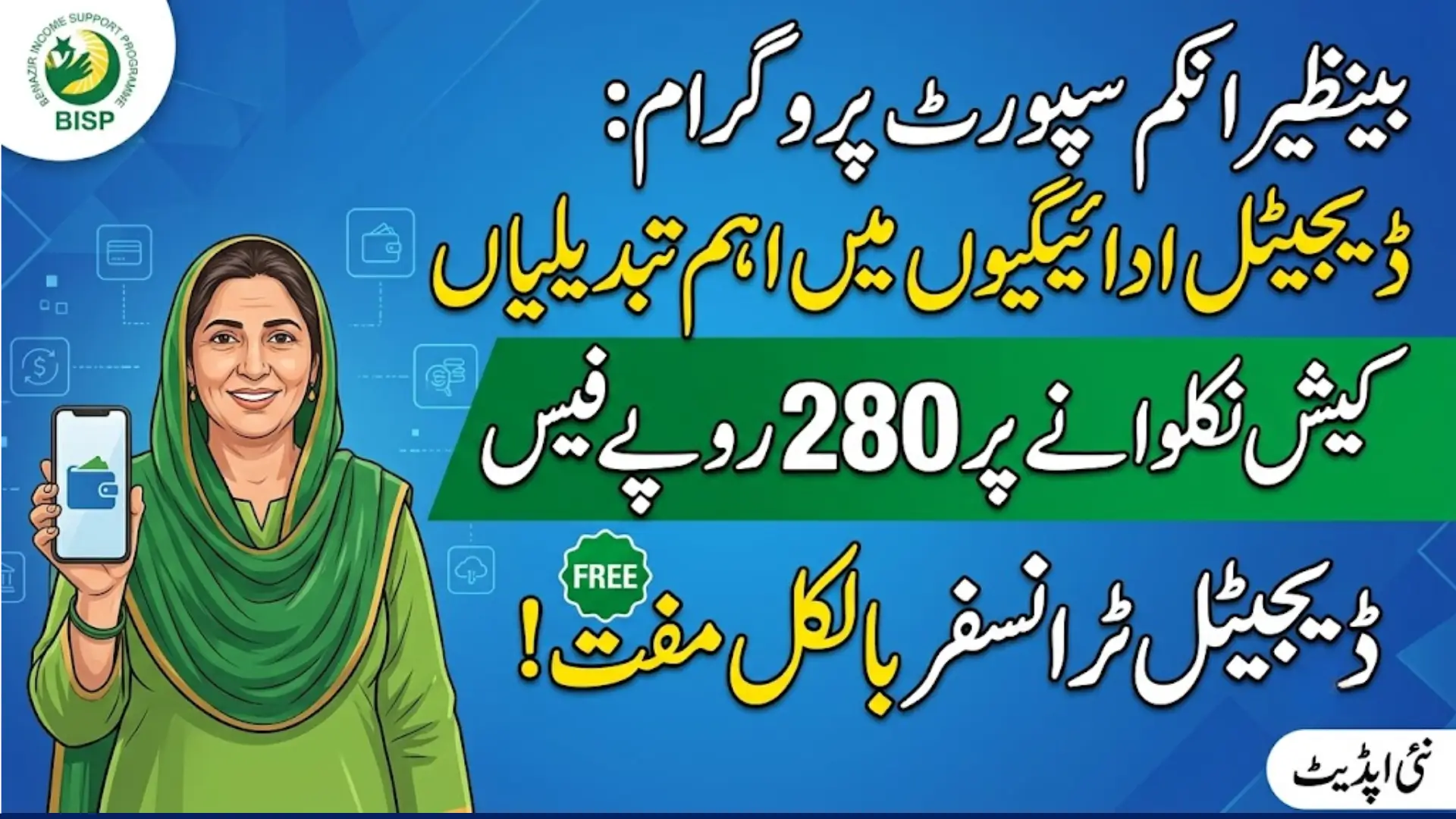
The Benazir Income Support Programme (BISP) is moving towards a fully digital payment system to improve transparency, reduce fraud, and make payments easier for beneficiaries. This new system introduces digital wallets that allow people to receive and manage their funds through multiple banks instead of relying on a single payment method.
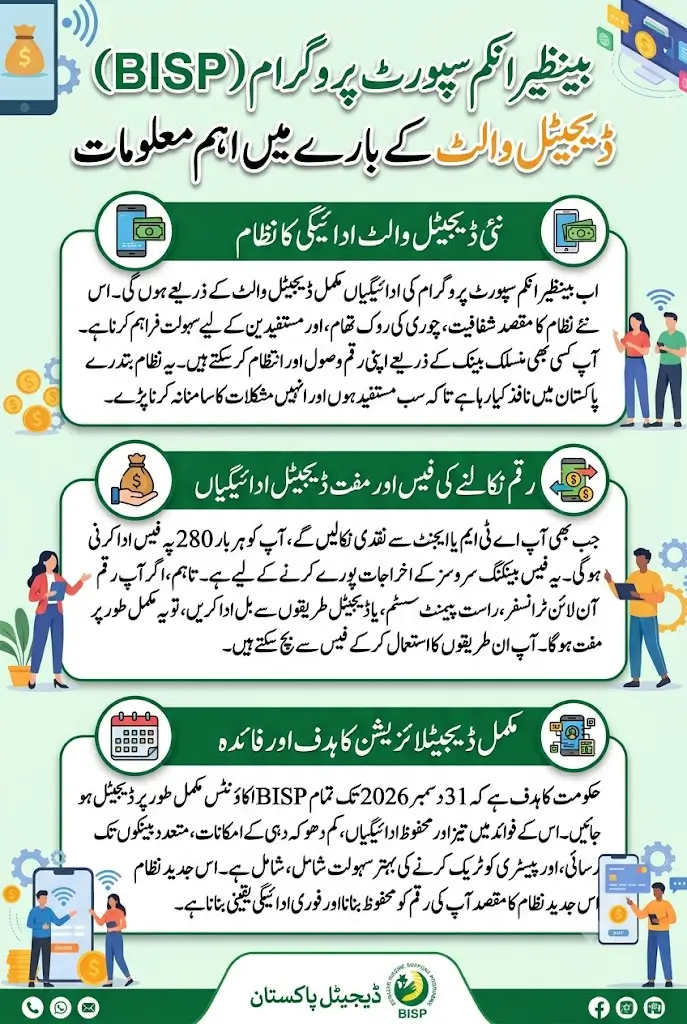
With this transformation, beneficiaries will have more control over their money, including options to transfer funds digitally or withdraw cash when needed. However, a key update has introduced a cash withdrawal fee, which is important for every beneficiary to understand before using the system.
BISP Digital Wallet Update at a Glance
Here’s a quick overview of the latest update:
| Details | Information |
|---|---|
| Programme | Benazir Income Support Programme (BISP) |
| System | Digital Wallet Interoperability |
| Cash Withdrawal Fee | Rs. 280 per transaction |
| Online Transfers | Free |
| RAAST Transfers | Free |
| Full Digitalisation Target | 31 December 2026 |
This table gives a simple snapshot, but the real impact depends on how beneficiaries use the system in daily life.
You can also read: 8171 School Wazifa Check Online
Rs. 280 Cash Withdrawal Fee Explained
Under the new system, beneficiaries will be charged Rs. 280 each time they withdraw cash from their digital wallet. This fee applies only when money is taken out physically through ATMs or banking agents.
The purpose of this charge is to cover operational and banking service costs. The State Bank of Pakistan will review and update these charges every six months, so the amount may change in the future depending on policy adjustments.
Free Transactions: What Still Costs Nothing
While cash withdrawals now have a fee, digital transactions remain completely free. This is part of the government’s plan to encourage a shift toward cashless payments.
You can avoid charges by using the following methods:
- Online bank transfers from your wallet
- RAAST instant payment system
- Sending money to another account digitally
- Paying bills through digital channels
Using these options not only saves money but also reduces the need to visit banks or agents.
Digital Wallet Interoperability & Bank Integration
The new system is based on interoperability, which means beneficiaries can access their funds through multiple partner banks instead of being limited to one. This makes the system more flexible and accessible across different regions.
The rollout is happening in phases, with multiple microfinance banks joining the system. By the end of July, all participating banks are expected to be fully connected, allowing smooth transactions nationwide.
Full Digitalisation Timeline (2026 Target)
The government has set a clear target to fully digitalise all BISP accounts by 31 December 2026. This means every beneficiary will eventually use a digital wallet for receiving and managing payments.
This transition is part of a broader strategy to modernise welfare systems in Pakistan. It aims to reduce delays, eliminate middlemen, and ensure that funds reach the right people securely and efficiently.
You can also read: BISP 8171 Biometric Payment
Benefits of the New Digital Wallet System
Despite the withdrawal fee, the system offers several important advantages that can improve the overall experience for beneficiaries.
Key benefits include:
- Faster and more secure payments
- Reduced chances of fraud or deductions
- Access through multiple banks
- No need to stand in long queues
- Better tracking of payment history
These improvements make the system more reliable compared to older manual or single-channel methods.
Concerns Raised by the Government Committee
During the official briefing, lawmakers expressed concern that many beneficiaries still do not understand how the new system works. Lack of awareness can lead to confusion, misuse, or unnecessary charges.
The committee also highlighted issues in coordination between banks and programme officials. Authorities have been directed to improve guidance, awareness campaigns, and support systems to help people adapt smoothly.
Important Incident & Compensation Update
The meeting also discussed a tragic incident at a distribution centre in Rahim Yar Khan, where a roof collapse caused casualties. This raised serious concerns about safety and accountability in payment operations.
As a result, strict action was taken, and compensation was provided:
- Rs. 2 million to families of deceased beneficiaries
- Rs. 500,000 to injured individuals
- The responsible bank was penalised and paid the compensation
This highlights the importance of proper monitoring and safe infrastructure in welfare programmes.
What BISP Beneficiaries Should Do Now
Beneficiaries should start preparing for the digital system to avoid confusion and unnecessary costs once it becomes fully active.
Here are some practical steps:
- Learn how to use your digital wallet
- Prefer online or RAAST transfers to avoid fees
- Keep your CNIC and mobile number updated
- Follow official BISP announcements regularly
- Seek help from authorized centres if needed
Taking these steps early can help you save money and use the system more efficiently.
Common Mistakes to Avoid
Many beneficiaries may unknowingly lose money or face issues due to simple mistakes. Avoiding these can make a big difference.
- Withdrawing small amounts frequently (leads to repeated fees)
- Not understanding free vs paid transactions
- Sharing wallet details with others
- Ignoring official updates and guidelines
Being aware of these mistakes helps you stay safe and financially smart.
You can also read: BISP 8171 Digital Wallet Payments


Conclusion
The introduction of digital wallets in BISP is a major step toward a modern and transparent welfare system. While the Rs. 280 withdrawal fee may seem like a burden, it can easily be avoided by using free digital options like RAAST and online transfers.
Experts recommend that beneficiaries gradually shift to digital usage instead of relying on cash withdrawals. This not only saves money but also aligns with the future direction of financial systems in Pakistan, where convenience, security, and speed are becoming the top priorities.