

pmrrp.nitb.gov.pk
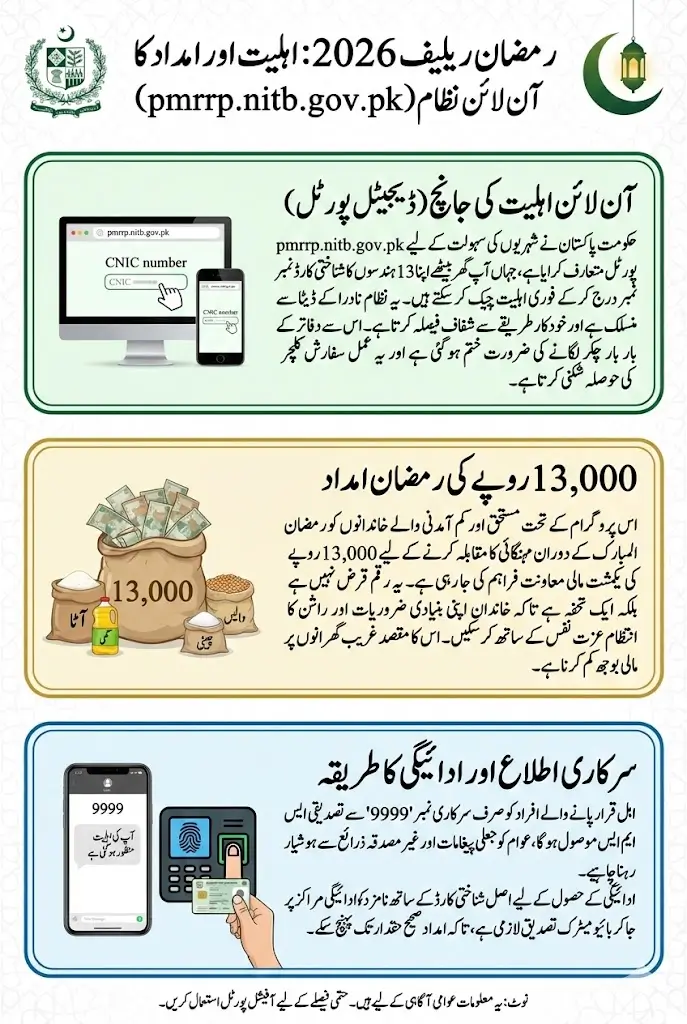
pmrrp.nitb.gov.pk As Ramadan 2026 approaches, families across Pakistan are actively searching for accurate information about financial assistance announced for low-income households. In many areas, rising food prices and daily expenses have increased financial pressure, especially for families depending on limited income sources. To provide relief in a transparent way, the Government of Pakistan introduced an online verification system that allows citizens to check their eligibility from home using their CNIC number.
From a ground-level perspective, the shift toward digital verification is being welcomed by many citizens. Instead of visiting offices repeatedly or relying on unofficial sources, families can now check their status within seconds. This system is designed to reduce confusion, prevent favoritism, and ensure that support reaches deserving households during Ramadan when expenses naturally increase.
You Can Also Read: Maryam Ko Batayn App Download
Official Platform Overview: Online CNIC Verification System
The pmrrp.nitb.gov.pk web portal functions as the official digital gateway for checking eligibility for the Ramadan financial assistance program. The system is connected with national data records and automatically verifies the applicant’s details after CNIC submission. This method ensures that decisions are based on verified information rather than manual approval.
In practical terms, the portal simplifies access for citizens living in both urban and rural areas. People with basic internet knowledge can use the platform through mobile devices or computers without assistance. This transition to online verification represents a major improvement compared to traditional welfare distribution systems that often required physical visits and paperwork.
The portal system provides the following advantages:
- Instant eligibility verification through CNIC entry
- Reduced need for physical visits to government offices
- Transparent selection based on official records
- Nationwide accessibility for all citizens
- Protection against unauthorized agents
You Can Also Read: Maryam Ko Batayn Signup on App for 10000
Meaning and Purpose of the 9999 Relief Assistance Channel
Many citizens associate the relief program with the number 9999, which is linked to official communication regarding eligibility confirmation and payment instructions. This communication channel helps ensure that verified beneficiaries receive accurate updates about the next steps in the process.
Understanding how official communication works is important to avoid misinformation. Citizens should rely only on verified government messages and ignore unconfirmed social media claims. Clear communication helps prevent confusion and protects applicants from fraud attempts.
Important information about official communication:
- Official messages provide payment guidance
- The portal shows eligibility status
- Citizens should wait for confirmation before visiting centers
- Unofficial messages should never be trusted
You Can Also Read: Maryam Ko Batia App Registration Error And Fixes
Financial Support Structure: Rs 13,000 Ramadan Assistance Explained
The program provides financial assistance of Rs 13,000 to eligible families to help manage essential household expenses during Ramadan. The objective is to support families who face difficulty purchasing basic food items and daily necessities. This assistance is not a loan and does not require repayment.
In many communities, households use the financial support to prepare for increased consumption during the holy month. From a social welfare perspective, direct cash assistance allows families to decide their priorities according to their needs rather than receiving limited item-based support.
The assistance is generally used for:
- Purchasing flour and wheat products
- Buying sugar and cooking oil
- Managing grocery expenses
- Supporting daily household consumption
You Can Also Read: Maryam Ko Batayn Online Web Portal
Step-by-Step Eligibility Checking Procedure Online
The eligibility checking process has been designed to be simple so that even individuals with limited digital experience can use it. After visiting the official portal, citizens must enter their 13-digit CNIC number and complete the captcha verification displayed on the screen.
Once the information is submitted, the system processes the request immediately and displays the result. This instant response allows families to plan their Ramadan expenses with greater certainty. The online method also reduces unnecessary travel and saves time.
Process to check eligibility:
- Open the official web portal
- Enter CNIC number without dashes
- Complete captcha verification
- Submit request
- View eligibility result instantly
You Can Also Read: Maryam Ko Batain Complaint Categories
Eligibility Determination Criteria Used in Digital Screening
Eligibility decisions are made through automated screening of national data records. The system verifies applicant details using information connected with NADRA and other welfare databases. Household income, asset ownership, and socio-economic indicators are reviewed before determining eligibility.
This digital evaluation ensures fairness by removing manual influence. The system prioritizes households with greater financial need based on verified records rather than personal recommendations. Such automated verification improves transparency and reduces the risk of duplicate claims.
You Can Also Read: Maryam Ko Batain Programme March 2026
Applicant Categories Most Likely to Receive Support
Based on available information and previous welfare initiatives, certain household categories are more likely to qualify for assistance. These groups generally include families facing financial hardship and limited income opportunities.
Common qualifying groups include:
- Low-income households
- Families registered in welfare databases
- Citizens meeting poverty score criteria
- Households without high-income employment
Reasons an Application May Be Marked Ineligible
Some applicants receive an ineligible result due to information already present in official records. This does not always mean a mistake in application but often reflects data available in national databases.
Common causes of ineligibility include:
- Income exceeding eligibility threshold
- Ownership of significant assets
- Outdated CNIC information
- Data mismatch in official records
Citizens who believe their records are incorrect may update their information before checking again. Accurate data improves the chances of correct eligibility assessment.
Expected Timeline for Fund Distribution During Ramadan 2026
Payments are expected to be released in phases before or during Ramadan. This phased approach helps manage verification workload and ensures smooth distribution across provinces and districts. Early verified applicants may receive assistance first, while others may receive funds after additional verification.
This structured distribution model prevents overcrowding at payment centers and allows authorities to manage resources efficiently. Citizens are advised to wait for official confirmation before visiting any location for payment collection.
Notification Mechanism for Approved Beneficiaries
Approved beneficiaries are informed through official communication channels. It is essential that the mobile number registered with the CNIC remains active to receive updates. Notification messages typically include instructions regarding payment collection procedures.
Citizens should carefully follow official guidance and avoid responding to unknown messages. Proper communication ensures that beneficiaries receive assistance without delay or confusion.
Payment Collection and Verification Requirements
To maintain transparency and prevent fraud, identity verification is mandatory before payment is issued. Beneficiaries must present original documents and complete verification procedures at designated centers.
Requirements for payment collection:
- Original CNIC for identity verification
- Personal presence of beneficiary
- Biometric confirmation if required
Security Awareness: Protecting Citizens From Fraud
Relief programs often attract fraudulent activities targeting vulnerable citizens. Awareness and caution are essential to ensure safe participation in the program. Authorities emphasize that the relief package is completely free and does not require any payment for approval.
Safety guidelines for applicants:
- Never share CNIC with unknown individuals
- Do not pay any registration or processing fee
- Use only the official web portal
- Trust only verified government announcements
Web Portal and Official Communication System Comparison
| Service Method | Main Purpose | How Citizens Use It |
|---|---|---|
| pmrrp.nitb.gov.pk Portal | Check eligibility status | Enter CNIC and view result |
| Official Communication Channel | Provide payment instructions | Receive confirmation message |
Policy Objective Behind Launching an Online Relief System
The introduction of an online verification system reflects broader governance reforms focused on improving welfare distribution. Digital verification reduces administrative delays, minimizes manual errors, and ensures that public funds reach deserving families efficiently.
Key objectives of the digital system include:


- Transparent beneficiary selection
- Reduced dependency on intermediaries
- Faster service delivery
- Nationwide accessibility
Conclusion
The pmrrp.nitb.gov.pk verification system represents an important step toward modern and transparent welfare delivery in Pakistan. By using CNIC-based digital screening, the government aims to ensure that financial assistance reaches families who genuinely need support during Ramadan.
For ordinary citizens, the most significant benefit is clarity and convenience. Families can verify their status quickly, avoid unnecessary travel, and prepare for Ramadan with greater confidence. This digital initiative reflects a growing commitment to fair, efficient, and accessible public service delivery across the country.