

Maryam Ko Batayn Online Web Portal
Maryam Ko Batayn During Ramzan, rising household expenses create real pressure for low-income families across Punjab. In recent visits to local registration points and community gatherings, many citizens shared the same concern: they want a simple, reliable method to confirm whether they qualify for government assistance without visiting multiple offices. To address this need, the Punjab Government introduced a centralized digital system that allows applicants to submit requests and monitor approval from home using their mobile phones.
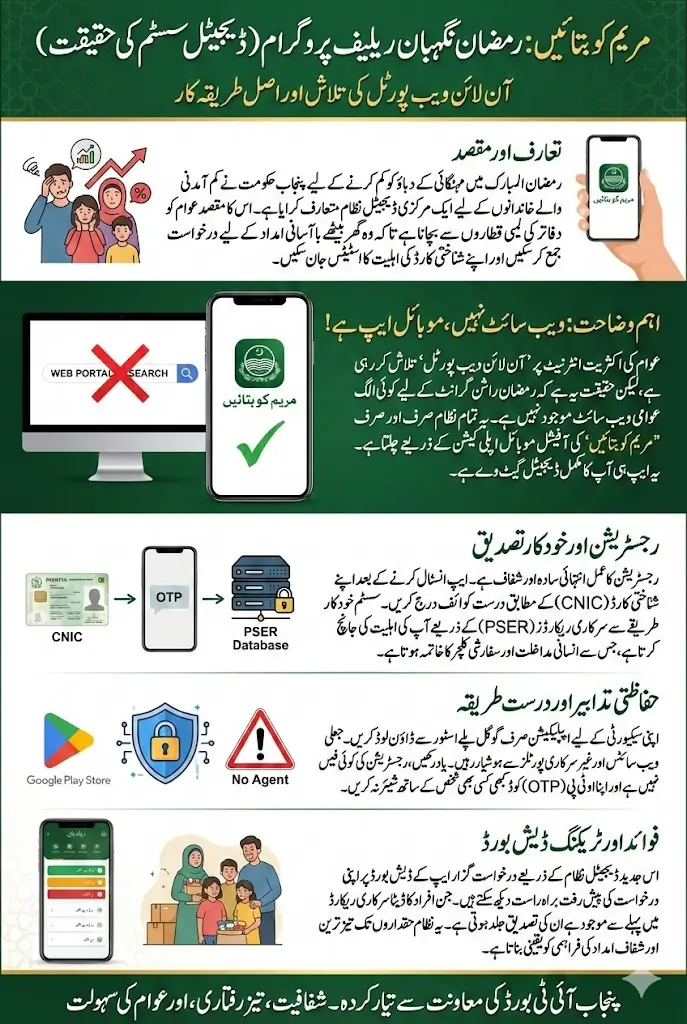
This system is widely known among citizens as the Maryam Ko Batayn platform. People often search online for a website to check their CNIC status, but the actual system operates through an official mobile application. The application acts as a complete digital gateway where identity verification, eligibility assessment, and approval tracking are performed automatically. This method reduces administrative delays and ensures that relief reaches deserving households efficiently.
Key objectives of the digital relief system include:
- Providing financial assistance to deserving families during Ramzan
- Eliminating long queues at government offices
- Ensuring transparent verification through official records
- Delivering support through a secure digital monitoring process
You Can Also Read: Maryam Ko Batain Programme March 2026
Understanding the Reality Behind the Online Web Portal Search
Across Punjab, the phrase “online portal” has become common when discussing government services. However, in the case of the Ramzan Ration Grant, there is no separate public website where citizens can enter their CNIC to check eligibility. Through interviews with applicants and local officials, it became clear that the confusion arises from expectations shaped by older web-based systems.
The Maryam Ko Batayn mobile application performs all functions typically associated with a web portal. It allows citizens to register, submit applications, verify identity, and track status within one secure interface. The mobile-first design reflects a broader shift toward digital governance where services are delivered directly to citizens rather than through intermediaries.
The application functions as a digital portal by enabling users to:
- Create a personal account linked to CNIC details
- Submit requests for Ramzan financial assistance
- Receive automated eligibility confirmation
- Monitor application progress in real time
- Access official updates and notifications
This centralized digital model helps reduce misinformation and prevents unauthorized agents from exploiting applicants.
You Can Also Read: Maryam Ko Batain Complaint Categories Explained
Official Registration Platform and Technical Oversight
The only authorized system for Ramzan Ration Grant services is the official Maryam Ko Batayn mobile application. The software infrastructure was developed with support from the Punjab IT Board, which manages data security and system reliability. Citizens must download the application exclusively from the Google Play Store to ensure authenticity.
Field observations indicate that most successful applicants used the official application directly without relying on third-party assistance. The app’s interface is designed in simple language, making it accessible even for first-time smartphone users. Once installed, the application becomes the primary platform for all communication regarding Ramzan relief support.
Core features available within the official application include:
- Secure account creation and identity authentication
- Direct submission of Ramzan Ration Grant requests
- Automated CNIC-based verification system
- Digital dashboard for monitoring approval status
- Notification system for application updates
Applicant Registration Procedure and Identity Verification
The registration process has been structured to minimize complexity while ensuring accurate verification. After installation, applicants must enter their personal details exactly as recorded on their CNIC. During field visits, officials emphasized that even minor data mismatches can delay approval because the system compares entered information with official records.
After submitting personal details, applicants receive a one-time password on their registered mobile number. This step confirms identity and activates the user account. Once verification is complete, the application dashboard becomes accessible and applicants can submit their request for Ramzan Ration assistance.
Essential information required for registration includes:
- Full name according to CNIC
- Date of birth
- CNIC number
- Active mobile number linked to CNIC
- Password for account security
Providing correct information significantly improves the speed of eligibility verification and reduces rejection risk.
Automated CNIC Checking and Eligibility Assessment
The digital system does not require manual document submission for initial verification. Instead, the platform automatically checks CNIC details against official government welfare records. This automated verification ensures that assistance is distributed fairly based on verified socio-economic data rather than manual selection.
Eligibility confirmation is conducted through the Punjab Socio-Economic Registry (PSER), which contains financial and household information used for welfare programs. Applicants whose data already exists in this registry usually receive quicker decisions because their eligibility profile is pre-verified.
After submission, applicants may receive one of the following results:
- Application approved for financial assistance
- Application under review and pending verification
- Application rejected due to ineligibility
This structured verification system improves transparency and reduces administrative discretion.
Approval Timeline and Processing Expectations
Processing time varies depending on whether an applicant’s data is already available in government records. During reporting in both urban and rural districts, officials confirmed that digital verification has significantly reduced waiting periods compared to traditional manual systems.
Applicants with existing welfare records often receive confirmation within a short period. New applicants may require additional validation, which slightly extends processing time. However, the digital dashboard allows applicants to monitor progress without visiting offices, which improves convenience and trust.
Ramzan Ration Grant Verification Timeline
| Applicant Category | Typical Processing Time | Explanation |
|---|---|---|
| Registered in welfare database | Within 24 hours | Pre-verified socio-economic data available |
| Not previously registered | Up to 4 days | Additional record verification required |
| Incorrect or incomplete data | Processing delayed | Information mismatch detected |
This timeline reflects a balance between speed and accuracy in digital verification.
Eligibility Requirements for Financial Assistance
The Ramzan Ration Grant targets households facing financial hardship. Eligibility is determined through digital screening rather than manual recommendations. Conversations with local administrators confirmed that the system prioritizes fairness by relying on official data records.
Basic eligibility conditions include:
- Permanent residency within Punjab
- Valid computerized CNIC
- Minimum age requirement of 18 years
- Belonging to a deserving or low-income household
- Successful verification through official databases
Meeting these conditions does not automatically guarantee approval, as final decisions depend on digital verification results.
Advantages of the Mobile-Based Relief Distribution Model
The shift from physical registration centers to a mobile-based system reflects a broader modernization of public welfare delivery. Citizens can now apply for assistance without traveling long distances or waiting in extended queues. This approach also limits the role of intermediaries and improves accountability.
Based on observations from applicants and local officials, the mobile-based system provides several practical benefits:
- Transparent tracking of every application
- Reduced risk of fraud or duplicate registrations
- Direct communication between system and applicant
- Secure digital record keeping
- Convenience for rural and urban users alike
This model represents a significant step toward efficient and citizen-focused service delivery.
Essential Safety Guidelines for Applicants
With the popularity of the Ramzan Ration Grant program, several unofficial websites and agents have appeared claiming to offer CNIC checking services. Authorities strongly advise citizens to rely only on the official application for registration and verification.
To ensure safe participation, applicants should follow these precautions:
- Download the application only from the official app store
- Never share OTP codes with any individual
- Avoid unofficial CNIC checking websites
- Do not pay any registration or processing fee
- Contact official support channels for assistance
Protecting personal information is essential for preventing fraud and misuse of data.
Transparent Monitoring and Digital Fund Distribution
Once approved, beneficiary details are recorded digitally and the assistance process begins without manual intervention. Applicants can monitor status updates through the same dashboard used for registration. This integrated approach eliminates uncertainty and provides clear information at every stage of the process.


The digital monitoring system ensures that funds are distributed according to verified records rather than manual discretion. By linking eligibility verification, approval tracking, and payment processing within a single platform, the system strengthens transparency and public trust in welfare distribution.
The Maryam Ko Batayn platform therefore functions as a complete digital gateway for Ramzan Ration Grant services. Citizens seeking assistance need only register through the official mobile application, submit their request using CNIC details, and monitor approval directly through the system. This structured and transparent model reflects a modern approach to public welfare delivery in Punjab.