
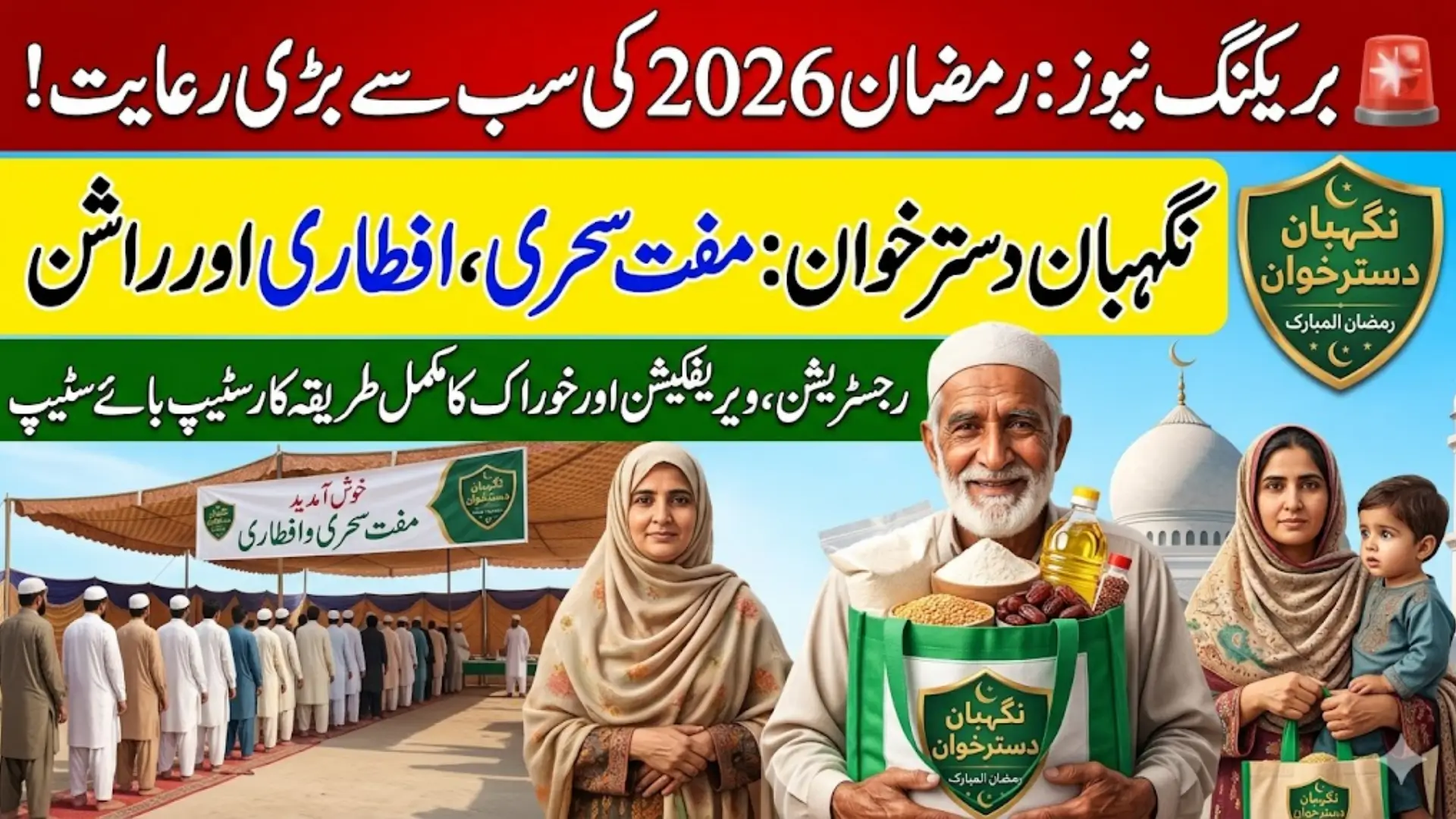
Nighaban Dastarkhawan
Nighaban Dastarkhawan holy month of Ramadan is a time of blessings, patience, and generosity. However, in recent years the rising cost of living in Pakistan has made it increasingly difficult for many families to manage daily meals during this sacred month. Prices of flour, sugar, cooking oil, pulses, and fruits have increased significantly, putting pressure on households that already struggle with limited income. In response to these challenges, the Punjab government launched the Nighaban Dastarkhawan program, a welfare initiative designed to provide free Sehri and Aftari meals along with Rashan support to deserving citizens.
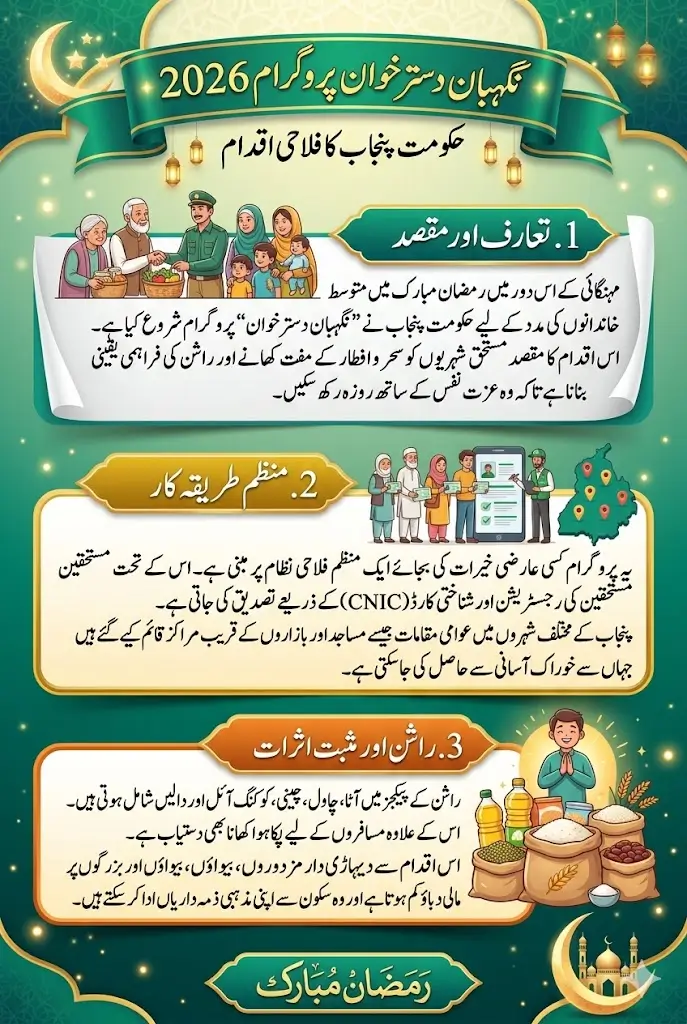
Across different cities of Punjab, the program is becoming widely known as a practical step to help families manage Ramadan expenses. From what people are sharing in local communities, the system is not based on random charity. Instead, it follows a planned process that includes registration, verification, and scheduled food distribution. This method helps maintain dignity for beneficiaries while ensuring that assistance reaches the people who truly need it.
For daily wage workers, widows, elderly citizens, and large families with limited income, this initiative has become an important source of support. Many people say that these Dastarkhawan centers allow them to observe Ramadan with peace of mind, knowing that at least basic food arrangements are available.
You Can Also read: 9999 Web Portal Check 2026 Eligibility And Registration
Nighaban Dastarkhawan Initiative 2026
The Nighaban Dastarkhawan initiative was introduced as part of a broader effort to address food insecurity in Punjab. Over the past few years, inflation has affected nearly every household in Pakistan, but its impact has been especially severe on low-income families. When grocery prices increase, the first challenge people face is managing their kitchen expenses.
The idea behind this initiative is simple yet effective: provide organized food assistance so that deserving families do not go hungry during Ramadan. Instead of temporary charity drives that happen for a few days, the program aims to create a structured welfare system where families can receive support in an orderly manner.
In many districts, Dastarkhawan centers have been set up near busy public areas such as markets, mosques, and community halls. These locations are selected so that workers, travelers, and local residents can easily access food arrangements at Sehri and Aftari time. The presence of volunteers and local administration ensures that the environment remains organized and respectful.
This initiative is also important because it promotes social solidarity. When communities work together to support the needy, it strengthens public trust and encourages a culture of compassion.
You Can Also read: Meri Gari Scheme 2026 Online Registration Reopen
Why Free Sehri and Aftari Support Is Important in Ramadan
Ramadan brings spiritual joy to Muslims, but it also increases household expenses. Families must prepare meals for both Sehri and Aftari every day for an entire month. This naturally increases the consumption of flour, cooking oil, fruits, and other groceries. For people with stable income, this may not be a major issue, but for daily wage workers it can become a serious burden.
In Pakistan, a large number of workers earn income on a daily basis. If work opportunities decrease or expenses rise suddenly, it becomes difficult for them to manage food costs. This is where welfare programs like Nighaban Dastarkhawan play a crucial role.
Free Sehri and Aftari arrangements ensure that people who cannot afford proper meals still have access to nutritious food. It also allows families to focus on their religious responsibilities rather than worrying about grocery prices every day.
You Can Also read: Talk 2 CM Portal To Submit Feedback And Registered Complaint
Some important reasons why this support matters include:
- Rising inflation has increased the cost of basic food items in Pakistan
- Daily wage workers often have unstable income during Ramadan
- Large families face higher food consumption during fasting
- Elderly people and widows may have limited financial support
- Access to nutritious food helps people maintain health while fasting
By providing free meals and Rashan assistance, the initiative reduces financial pressure and ensures that families can observe Ramadan with dignity.
Key Features of the Nighaban Dastarkhawan Program
One of the most noticeable aspects of the Nighaban Dastarkhawan program is its organized structure. In the past, charity food distribution sometimes created overcrowding and confusion. However, this initiative has been designed to avoid such problems by introducing a proper system.
Authorities have developed a registration and verification process that identifies deserving families. This ensures that assistance reaches those who genuinely need it while preventing misuse of resources. Distribution centers are managed carefully so that people can collect their food packages without long waiting times.
Another important feature of the program is the involvement of local communities. Volunteers, social workers, and local administration collaborate to manage food preparation, packing, and distribution. Their efforts help keep the system efficient and transparent.
Key features that make this program effective include:
- Organized Rashan distribution for low-income families
- Free Sehri and Aftari arrangements during Ramadan
- Proper registration and CNIC verification system
- Distribution centers located in accessible areas
- Community volunteer support for smooth operations
Because of these features, the program is gaining public attention as a reliable welfare initiative.
You Can Also read: Nighaban Card Distribution Launch In 2.5 Million
Areas and Cities Where Dastarkhawan Centers Are Operating
The Nighaban Dastarkhawan initiative has been introduced in multiple districts across Punjab. Authorities have tried to ensure that both urban and rural areas benefit from the program so that assistance reaches as many people as possible.
In large cities, several Dastarkhawan centers have been established to accommodate a greater number of beneficiaries. Meanwhile, in smaller towns and villages, community halls or local government buildings are often used as distribution points. These centers are usually located near busy areas where people can easily reach them without traveling long distances.
Residents from different districts report that the centers are functioning with a structured schedule. Beneficiaries are informed about specific dates and times when they can collect their Rashan packages or attend Aftari arrangements.
This expansion across multiple regions demonstrates that the initiative is not limited to a single city but is part of a broader welfare effort across Punjab.
You Can Also read: 8558 Check Online KPK 12500 Payment For Registered
Complete List of Food Items Provided for Sehri and Aftari
A major concern for many citizens is understanding what type of food support they will receive under the program. The Nighaban Dastarkhawan initiative focuses on providing basic kitchen items that are commonly used in Pakistani households.
These items are selected carefully to ensure that families can prepare both Sehri and Aftari meals without purchasing expensive groceries from the market. The Rashan packages mainly include staple food products that can support a household for a certain period.
Typical items included in the food support packages are:
- Atta (flour) used for making roti and chapati
- Rice for daily meals
- Sugar for tea and desserts
- Cooking oil or ghee for food preparation
- Pulses such as daal for protein
- Tea leaves which are a common part of Pakistani households
In addition to these groceries, some Dastarkhawan centers provide ready-to-eat Aftari meals for individuals who are not at home during sunset. These meals usually include dates, fruits, and light cooked food so that people can break their fast properly.
You Can Also read: Aghosh Program Check Balance Using Online PSPA Portal
Below is a general overview of the support provided under the initiative.
| Support Category | Items Provided | Purpose |
|---|---|---|
| Basic Rashan Package | Flour, Rice, Sugar, Cooking Oil, Pulses, Tea | Helps families manage kitchen expenses during Ramadan |
| Sehri Assistance | Flour, Tea, Milk (in some locations) | Supports preparation of early morning meals |
| Aftari Meal Support | Dates, Fruits, Juice, Cooked Food | Provides food for breaking the fast at Dastarkhawan centers |
Although the exact items may vary slightly from district to district, the main objective remains the same: ensuring that families receive essential nutrition during Ramadan.
Step-by-Step Method to Apply for the Nighaban Dastarkhawan Program
To maintain transparency and fairness, the program includes a simple application procedure. Authorities have designed the process in a way that even individuals with limited education can easily complete the registration.
Most applicants can apply through designated registration centers established in their districts. Staff members or volunteers help them fill out the required forms and provide guidance throughout the process.
The basic application process usually follows these steps:
- Visit the nearest registration or assistance center in your area
- Fill out the application form with your personal details
- Provide your CNIC for identity verification
- Mention the number of family members living in the household
- Submit the form and wait for verification from authorities
After the verification process is completed, eligible applicants receive confirmation and instructions regarding the date and location for collecting their Rashan packages or accessing meal services.
You Can Also read: Egov.kp.gov.pk Ramzan Relief Package Online Portal
Documents Required for Verification
Verification is a necessary part of the program because it ensures that resources are distributed fairly among deserving families. Without proper verification, there is always a possibility that individuals who do not qualify might receive assistance.
Authorities usually require a few basic documents that help confirm the identity and financial status of applicants. These documents are simple and commonly available to most citizens.
Applicants may be asked to provide the following:
- Original Computerized National Identity Card (CNIC)
- Basic household information including family size
- Proof of residence if requested by local administration
These requirements help authorities verify eligibility while maintaining transparency in the distribution process.
You Can Also read: 8070 Registration Online 2026 Last Date Online Apply
How the Distribution System Works
Once applicants are approved, they are informed about the distribution schedule and the location where they can collect their food packages. This scheduling system helps maintain order and prevents overcrowding at distribution centers.
On the assigned day, beneficiaries visit the center with their identification documents. Staff members verify their CNIC and confirm their registration before handing over the Rashan package. Volunteers are usually present to guide people and manage queues.
The distribution system includes several features that make the process smooth and organized:
- Token-based entry system to manage crowds
- CNIC verification before receiving Rashan packages
- Separate arrangements for women and elderly citizens
- Volunteers assisting beneficiaries during collection
- Proper packing and hygiene standards for food items
These measures ensure that the process remains respectful and efficient for everyone involved.
Special Facilities for Workers and Travelers
An important feature of the Nighaban Dastarkhawan initiative is the availability of free Aftari meals at public locations. These meals are particularly useful for people who cannot reach home in time for breaking their fast.
Workers such as drivers, laborers, shop employees, and delivery staff often continue their duties until late evening. For them, public Dastarkhawan centers provide a convenient place to break their fast without worrying about food expenses.
Facilities available at these centers often include:
- Ready-to-eat Aftari meals for immediate consumption
- Clean seating arrangements for visitors
- Drinking water and simple refreshments
- Easy access near markets or transport areas
These arrangements ensure that even those who are far from home during sunset can observe Ramadan comfortably.
Community Participation and Volunteer Support
Community participation is one of the strongest aspects of the Nighaban Dastarkhawan program. In many areas, local residents and youth volunteers have stepped forward to help manage the initiative.
Their involvement not only reduces administrative pressure but also creates a sense of shared responsibility within the community. Volunteers assist with food preparation, packing, and managing queues at distribution centers.
Common responsibilities handled by volunteers include:
- Assisting citizens during the registration process
- Packing Rashan items for distribution
- Guiding beneficiaries at food centers
- Maintaining cleanliness and hygiene standards
Through these efforts, communities play an active role in supporting those who are facing financial difficulties.
Positive Impact on Low-Income Families
For many families across Punjab, the Nighaban Dastarkhawan initiative has become a source of real relief during Ramadan. When essential groceries are provided free of cost, households can save money and use it for other important needs such as education, healthcare, and utilities.
Beneficiaries often say that the program allows them to focus on their daily work and religious responsibilities without constantly worrying about food expenses. For elderly citizens and widows who have limited income, this support can make a significant difference in their daily lives.
The positive impact of the program can be seen in several ways:
- Reduced financial pressure on low-income households
- Improved access to food during Ramadan
- Greater sense of dignity through organized distribution
- Support for vulnerable groups such as widows and elderly citizens
These benefits highlight the importance of well-planned welfare programs.
Future Expansion Plans for the Nighaban Dastarkhawan Initiative
As the program continues to operate across Punjab, authorities are evaluating its effectiveness and exploring ways to expand it further. Feedback from beneficiaries and community members is being collected to improve the system.
Possible future developments may include increasing the number of distribution centers and improving digital registration methods so that more people can apply easily.
Some areas that may see improvement include:
- Expansion of Dastarkhawan centers to additional districts
- Stronger monitoring systems to ensure transparency
- Improved arrangements for Sehri and Aftari meals
- Better coordination with community volunteers
If these improvements continue, the initiative could become a long-term welfare model that helps address food insecurity in Pakistan.


Conclusion
The Nighaban Dastarkhawan Free Sehri and Aftayari program for Ramadan 2026 represents an important step toward supporting low-income families during a time when inflation has made basic groceries expensive. Through organized Rashan distribution and public Aftari arrangements, the initiative ensures that deserving citizens have access to essential food during the holy month.
By combining government support with community participation, the program provides assistance in a respectful and transparent manner. For thousands of families across Punjab, it offers not just food but also relief and hope during Ramadan. As the initiative continues to expand, it has the potential to become a strong example of how structured welfare programs can address real social challenges in Pakistan.