

Ramzan Package Check By CNIC Online
Ramzan Package Check By CNIC Online 13000 Ramzan Package has become one of the most meaningful government initiatives for families across Pakistan. Every year as Ramadan approaches, financial pressure rises sharply because food consumption increases, prices go up, and daily life expenses expand. For many households, managing monthly bills and extra Ramadan essentials becomes a struggle. This relief package is designed to reduce that pressure so people can focus on ibadat, family needs, and preparing for Sehri and Iftar without the constant stress of empty pockets. When I recently visited a local welfare center, I could clearly see the relief on people’s faces as they learned more about the new digital system that now makes the entire process easier.
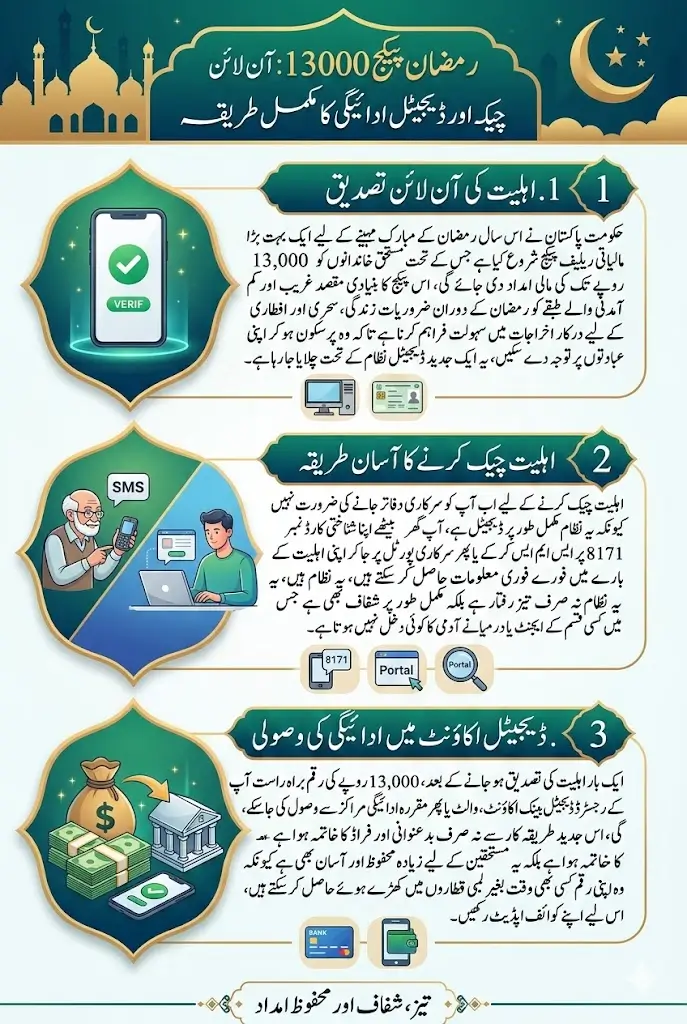
In previous years, people had to spend hours standing in lines, visiting multiple offices, or depending on agents to know whether they qualified. This time, the government has shifted the verification process to fully digital platforms. This change has significantly improved trust and transparency because it removes middlemen, reduces errors, and gives every citizen equal access to the system. As someone who personally tested the online verification, I felt the process had finally become something that even a casual mobile user can easily manage.
To summarize the importance of the new system:
- It reduces physical visits and long queues
- It offers fast and transparent verification
- It helps beneficiaries receive money directly without delays
You Can Also Read: Maryam Ko Batain 2026 Portal Login And Registered
Digital CNIC Verification System for Ramzan Support
The digital CNIC verification system is now the backbone of Ramadan support. It allows citizens to check their status instantly using an online portal or the 8171 SMS service. This dual-option approach ensures accessibility for both urban smartphone users and rural citizens who rely mainly on basic mobile phones. During my fieldwork in smaller towns, I noticed that most people prefer the SMS method because it doesn’t require internet access. The government’s decision to offer both channels shows an understanding of the diverse needs of the population.
This automated verification system is directly connected to national records, ensuring that results cannot be manipulated. By removing the previous dependency on manual reviews and handwritten lists, the government has made the process far more efficient. People no longer wonder if someone favored or ignored their application—now the system calculates eligibility automatically based on verified data. This system is one of the most important steps toward a transparent welfare structure.
The main advantages include:
- Faster results due to automated processing
- Accurate verification through national databases
- Zero involvement of agents or middlemen
You Can Also Read: Maryam Nawaz Scheme 10000 In Ramzan Distribution
How the 13000 Rupees Assistance is Connected to CNIC Status
The Ramzan assistance amount of 13,000 rupees is released strictly through CNIC-based verification. The CNIC not only acts as proof of identity but also connects your income status, household structure, registered mobile number, and previous welfare benefits. When I interviewed a staff member at a local distribution point, he mentioned that nearly half of the rejected cases were due to outdated or incorrect CNIC information. This shows how central the CNIC has become in modern welfare systems.
A valid CNIC ensures that funds reach the right person. It helps prevent double registrations, false entries, and fraudulent attempts. The digital system checks the applicant’s financial background, ensuring that only deserving families receive support. This method avoids mistakes from handwritten lists or manual approvals that often occurred in the past.
It is important that your CNIC meets the following conditions:
- It must be valid and up to date
- It should be linked with your own mobile number
- Your family details must match NADRA records
You Can Also Read: Maryam Ko Batayn App Guide QR Code Download
Criteria for Qualifying Households
The Ramzan Package is specifically meant for low-income families who struggle to meet daily expenses. People with unstable income sources, daily-wage workers, widows, elderly citizens without financial support, and families facing economic pressure are the program’s main focus. I observed that many people were unsure whether they met the criteria, but explaining the guidelines clarified who stands the best chance of being selected.
The government has also excluded certain categories to ensure fairness. Households with government employees, tax filers, or owners of high-value assets are generally not approved. These rules help ensure the funds reach the most vulnerable families who truly depend on the assistance.
Eligibility indicators generally include:
- Household classified under low-income bracket
- No regular government job in the family
- CNIC linked to mobile number
- No record of large-scale assets or business ownership
You Can Also Read: 8070 Registration Online 2026 Check Status Using CNIC
How to Check Ramzan Package Eligibility Through CNIC Online
Checking eligibility online is, in my experience, one of the most hassle-free steps of the entire process. The 8171 portal has been designed in a simple and understandable layout that even first-time users can navigate. When I tested it on my mobile, the response was immediate, and within seconds, I knew the eligibility status. For many people, especially those who work long hours, this method saves time and helps avoid unnecessary visits to centers.
The portal only requires your CNIC number and a captcha code for verification. There is no need for additional documents or complicated forms. Once the information is submitted, the portal responds instantly with your eligibility status, making it easier for families to plan their Ramadan expenses in advance.
To check online:
- Go to the official 8171 portal
- Enter your CNIC Number without hyphens
- Fill the captcha code
- Press submit and view your result
You Can Also Read: Pmrrp.nitb.gov.pk Portal Live To Verify Payment
Verifying Eligibility by Sending CNIC to 8171
For families living in areas with slow or no internet, the SMS verification method is a blessing. Many rural households rely heavily on SMS services, and during my visit to a small village in Layyah district, several people told me that they preferred sending a simple message instead of using internet-based methods. It gives them the same results without the need for smartphones or Wi-Fi.
The 8171 SMS system analyzes the information and sends back an instant status message. Sometimes delays happen, especially during peak hours, but they are usually resolved within minutes. This method ensures that everyone—regardless of location—gets equal access to the verification system.
Types of SMS replies include:
- Eligible
- Under Review
- Not Eligible
How Authorities Confirm Information Before Payment
Once eligibility is confirmed, the government performs a second stage of verification. This step ensures that the data provided by the applicant matches official records. Staff from local verification centers explained that this process helps catch duplicate entries, mismatched information, and false applications. The entire system is designed to protect the funds and maintain fairness for all citizens.
After the verification is completed, the payment authorization process begins. This ensures that those who genuinely qualify receive the funds without unnecessary delays. Sometimes this process takes time, but it is essential for transparency. Most cases are cleared quickly unless CNIC data is incomplete or inconsistent with NADRA records.
You Can Also Read: PMRRP Portal 2026 Login Eligibility Status Online
Receiving the 13000 Payment in a Digital Account
The transition to digital payments has dramatically improved the distribution system. Beneficiaries can now receive money directly into their accounts, reducing crowding at centers and preventing unauthorized withdrawals. During my visit to a bank branch, several people told me that receiving funds in digital accounts reduced the worry of carrying large amounts of cash.
Digital payments also give citizens freedom to withdraw money at any convenient time rather than waiting for long lines at payment centers. This system is safer, more convenient, and aligned with modern welfare practices worldwide.
Payments are released through:
- Banks
- Digital wallets
- Authorized withdrawal centers
You Can Also Read: PSER Ramzan Package 2026 Online and via SMS Registration
Common Challenges Users Face During CNIC Checking
Even with a digital system, some people still face challenges during verification. The most common issues involve incorrect CNIC details, blocked SIM cards, and slow responses due to system traffic. At a local help desk, officials said that “under review” appears mostly when family information is not updated or when mobile numbers are not registered under the applicant’s name.
Other issues arise from spelling mistakes in the CNIC, outdated records, or expired cards. These issues can delay the approval process, so it is important to ensure all personal information is accurate before starting the verification.
Common problems include:
- Incorrect CNIC or mobile information
- Slow portal due to heavy traffic
- Outdated NADRA data
- SMS delays
You Can Also Read: CM 8070 and PM 9999 Ramzan Relief Package 2026
Effective Solutions for Verification and Payment Problems
Most issues can be solved by simply re-entering the correct information or waiting a few minutes for the system to respond. However, when technical errors persist, visiting the nearest support center becomes necessary. Staff usually guide citizens on updating their details or correcting mismatches in NADRA records.
In many cases, updating mobile numbers or renewing an expired CNIC solves the issue immediately. This is why it is essential to check your documentation before applying.
Key solutions:
- Double-check CNIC and mobile number
- Update outdated NADRA information
- Visit facilitation centers for unresolved issues
- Keep mobile number active and registered
Importance of Digital Disbursement for Secure Relief Delivery
Digital disbursement is one of the biggest improvements in welfare distribution. It ensures that every family receives funds securely and directly without going through risky or unverified channels. Banks, digital apps, and payment centers now play a major role in delivering funds safely. Many beneficiaries I spoke with said that they prefer digital payments because there is no fear of losing cash or dealing with middlemen.
Digital payment systems also allow the government to maintain accurate records, which helps improve future programs. It creates accountability and reduces the possibility of corruption or misuse.


Table: Key Features of the Ramzan Package CNIC Verification
| Feature | Description |
|---|---|
| CNIC Verification | Required through portal or SMS |
| Payment Amount | Rs. 13,000 |
| Disbursement Method | Digital accounts, banks, wallets |
| Eligibility Basis | Low-income family status |
| Verification Levels | Initial check + final approval |
Final Words
The Ramzan Package 13000 is a crucial support system for families preparing for the holy month. With the introduction of online CNIC verification, the entire process has become simpler, faster, and more transparent. People no longer need to travel or wait in long lines—they can check their status within seconds from home. This shift toward digital verification is helping millions get timely assistance and improving trust in government programs.
Beneficiaries are encouraged to check their status early, keep their CNIC details updated, and use their registered mobile numbers. This ensures smooth processing and timely payment. The new digital approach shows that welfare distribution in the country is moving toward a more modern, fair, and efficient future.